
The Structure of the Prophecy of the Popes
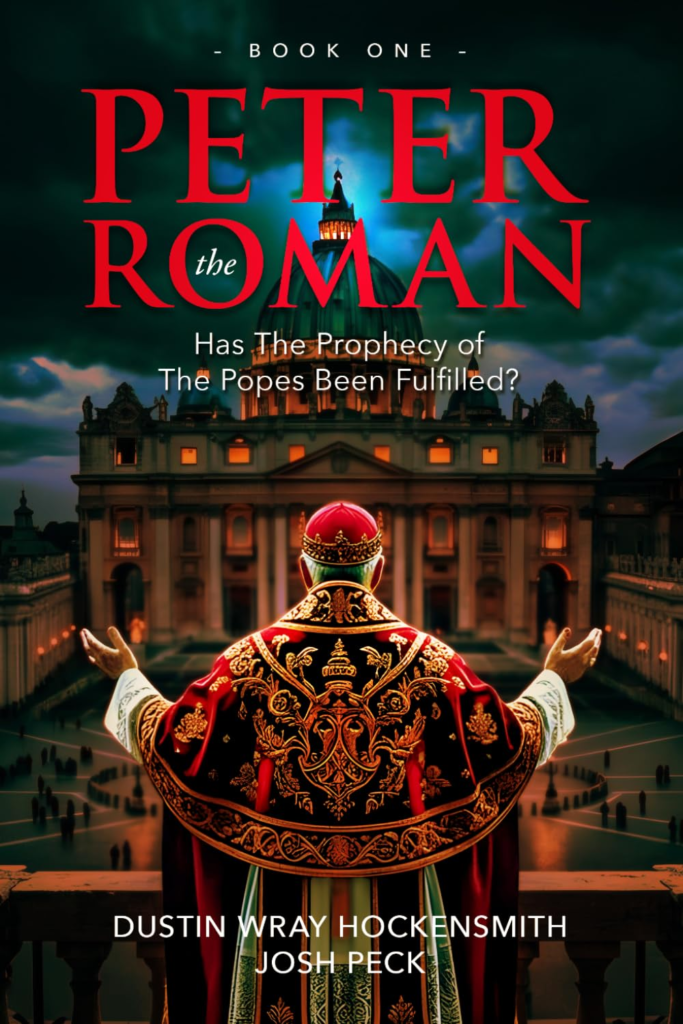
The Prophecy of the Popes, attributed to St. Malachy, is a list of 112 Latin mottos, each said to correspond to a pope or antipope from Celestine II (1143–1144) to a final figure known as Petrus Romanus, or in English, Peter the Roman. Each motto, typically a brief phrase, is believed to describe an aspect of the respective pope’s character, papacy, or heraldry, offering a cryptic summary of their reign or identity. First published in 1595 in Arnold Wion’s Lignum Vitæ, the prophecy has intrigued scholars and the faithful alike, with its final entry foretelling a dramatic end to the papacy and the city of Rome.
The prophecy begins with the motto Ex castro Tiberis (“From a castle of the Tiber”) for Celestine II, elected in 1143, and continues through 112 mottos, covering popes and several antipopes up to the present era. Each entry consists of a Latin phrase, followed in the Lignum Vitæ by the pope’s name and an explanation linking the motto to their life or reign. For example, the motto for Lucius II (1144–1145), Inimicus expulsus (“Enemy expelled”), is tied to his birth name, Gherardo Caccianemici, which resembles the Italian words for “to drive out” (cacciare) and “nemesis” (nemici). These prophetic mottos often describe heraldry, birthplaces, or notable events.
The mottos vary in length and specificity, ranging from single words to short phrases. Some, like De rure albo (“From the white countryside”) for Adrian IV (1154–1159), point directly to a pope’s birthplace, St. Albans. Others, such as Draco depressus (“Dragon pressed down”) for Clement IV (1265–1268), reference heraldic symbols, in this case an eagle clawing a dragon on his coat of arms. The prophecy includes antipopes, such as Victor IV (1159–1164), with the motto Ex tetro carcere (“Out of a loathsome prison”), linked to his title as cardinal of St. Nicholas in the Tullian prison. This inclusion of both legitimate popes and rival claimants shows the prophecy’s broad scope, encompassing the complex history of the papacy.
As the prophecy progresses, the mottos continue to align with papal attributes or reigns. For instance, Lumen in cœlo (“Light in the sky”) for Leo XIII (1878–1903) matches the star on his coat of arms. It’s also interesting to note that Pope Leo XIII re-founded the Vatican Observatory in 1891 and had an asteroid named after him in 2026. That seems to make the star imagery stand out more.
Pius X (1903–1914) has the motto Ignis ardens (“Burning fire”), which reflects his zealous reforms. The motto for John Paul II (1978–2005), De labore solis (“From the labor of the sun”), is associated with solar eclipses on his birth and funeral dates, as well as his global missionary work. Benedict XVI’s motto, Gloria olivæ (“Glory of the olive”), connects to his namesake, St. Benedict, and the Olivetan branch of the Benedictine Order. These later mottos maintain the pattern of linking to heraldry, names, or significant events.
The prophecy’s final entry stands apart, offering a narrative rather than a single motto. It reads:
In persecutione extrema S.R.E. sedebit. Petrus Romanus, qui pascet oves in multis tribulationibus: quibus transactis civitas septicollis diruetur, & Iudex tremendus iudicabit populum suum. Finis.
Translated, it states:
In the final persecution of the Holy Roman Church there will reign Peter the Roman, who will feed his flock amid many tribulations, after which the seven-hilled city will be destroyed and the dreadful Judge will judge the people. The End.
Unlike prior entries, this prophecy lacks the typical motto found in the rest, suggesting instead a future figure who will lead during a time of intense trial. The reference to the “seven-hilled city” most likely points to Rome, indicating its destruction, while the “dreadful Judge” implies a divine judgment, marking the prophecy’s apocalyptic conclusion.
The structure of the prophecy, with its 112 mottos, forms a chronological sequence that spans centuries, from the twelfth century to an undefined future. Each motto serves as a prophetic snapshot, capturing a facet of the pope’s identity or reign, often through symbolic or heraldic imagery. The final entry, with its vivid imagery of persecution and destruction, elevates the prophecy’s significance, pointing to an end-times scenario that resonates with biblical eschatology. This structured list, rooted in the Lignum Vitæ and elaborated through commentary, remains an interesting path toward understanding the papacy’s historical and prophetic trajectory.
Notes
See Appendix 1: The Prophecy of the Popes, found in Book 2, for the full list.
Malachy. Prophecy of the Popes (S.l.: EISENBRAUNS, 2015), 1–5.
Catholic News Agency. “CNA Explains: What Is the St. Malachy Prophecy and Why Are People Talking About It?” 2024. https://www.catholicnewsagency.com/news/263657/cna-explains-what-is-the-st-malachy-prophecy-and-why-are-people-talking-about-it.
“Vatican Observatory has asteroid named after pope Leo XIII.” Vatican News. Accessed July 17, 2026. https://www.vaticannews.va/en/vatican-city/news/2026-05/vatican-observatory-astronomy-asteroids-pope-leo-xiii.html.
Irish Central. “St. Malachy’s Prophecy – Is Pope Francis the Last Pope?” 2024. https://www.irishcentral.com/roots/history/st-malachy-prophecy-pope-francis.
Arnold Wion, Lignum vitae, ornamentum, & decus ecclesiae, in quinque libros divisum, vol. 1, bk. 2, chap. 40 (Venetiis: apud Georgium Angelerium, 1595), 311.
Arthur Devine, “Prophecy,” in The Catholic Encyclopedia, vol. 12 (New York: Robert Appleton Company, 1911), https://www.newadvent.org/cathen/12473a.htm.
Malachy. Prophecy of the Popes. S.l.: EISENBRAUNS, 2015.
Catholic Tradition. “Papal Prophecies of St. Malachy.” http://www.catholictradition.org/Papacy/prophecies.htm.
Get the Daily Renegade Newsletter
New articles, research, releases, videos, and major updates from Renegade Publishers.
Excerpted from Peter the Roman: Has the Prophecy of the Popes Been Fulfilled? Book 1 by Dustin Wray Hockensmith & Josh Peck.