
Objections to the Prophecy of the Popes
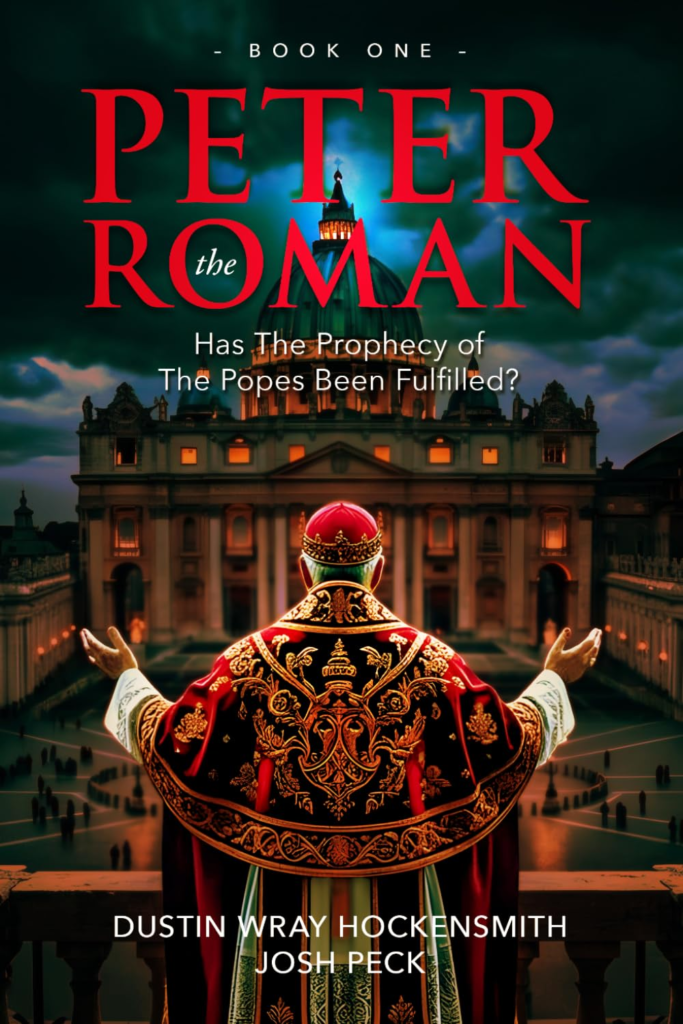
The Prophecy of the Popes has sparked debate since its first publication in 1595, with critics raising several objections to its authenticity and reliability. These objections focus on the prophecy’s origins, historical context, and interpretive challenges. Critics question whether it was truly authored by Malachy or represents a divine revelation.
One major objection centers on the prophecy’s late appearance, which was over four centuries after Malachy’s death in 1148. Critics note that no record of the prophecy exists in Malachy’s lifetime or in the centuries following, despite his well-documented life and friendship with St. Bernard of Clairvaux, who wrote extensively about him. The prophecy first surfaced in Arnold Wion’s Lignum Vitæ in 1595, during a period of political and religious turmoil in Europe. Scholars argue this late emergence suggests the text may have been composed in the late sixteenth century, possibly as a tool to influence papal elections or promote certain candidates. The absence of earlier references, even in Bernard’s detailed biography of Malachy, raises doubts about its attribution to the twelfth-century Irish saint.
Another objection points to the prophecy’s historical context, particularly its publication during the Counter-Reformation. Critics suggest the mottos, especially those for popes before 1595, may have been written with hindsight to align with known historical details, making them appear prophetic. For example, mottos like Ex castro Tiberis (“From a castle of the Tiber”) for Celestine II (1143–1144) or De rure albo (“From the white countryside”) for Adrian IV (1154–1159) fit neatly with their birthplaces or heraldry, suggesting an author familiar with papal history could have crafted them retroactively.
Critics also point out the prophecy’s inclusion of antipopes, such as Victor IV and Paschal III, as a potential flaw. The mottos for these figures, like Ex tetro carcere (“Out of a loathsome prison”) for Victor IV, align with their titles or circumstances, but their presence in a divine prophecy raises questions. Antipopes were not recognized as legitimate by the Church, and their inclusion alongside canonical popes suggests to some that the author may have been compiling a comprehensive list of papal claimants, legitimate or not, rather than receiving insight from God. This blending of popes and antipopes, particularly during the contentious periods of the twelfth and fourteenth centuries, supports the view that the prophecy was a historical construct rather than a supernatural vision.
The interpretive flexibility of the mottos some critics see in the prophecy forms another objection. Many mottos, especially for later popes, are so broad or symbolic that they can be applied to multiple figures or events. For instance, Lumen in cœlo (“Light in the sky”) for Leo XIII (1878–1903) is linked to the star on his coat of arms, but such imagery could fit other popes with similar heraldic symbols (although, when you add in the history of the Vatican Observatory and the asteroid named after Leo XIII, it becomes harder to wave away). Similarly, Religio depopulata (“Religion destroyed”) for Benedict XV (1914–1922) is tied to World War I and the Russian Revolution, yet these events could be interpreted to suit other eras of turmoil. Critics argue this vagueness allows proponents to find connections after the fact, undermining the prophecy’s specificity and credibility as a predictive text.
The final entry, Petrus Romanus, also draws scrutiny for its apocalyptic tone and lack of a prophetic motto like the prophecies that come before it. Unlike earlier mottos, which assign specific phrases to named popes, the prophecy’s conclusion (“In persecutione extrema S.R.E. sedebit. Petrus Romanus, qui pascet oves in multis tribulationibus…”) offers a narrative about a future figure leading during persecution, followed by Rome’s destruction. Critics contend this dramatic ending resembles apocalyptic literature common in the sixteenth century, designed to evoke fear or urgency rather than provide a precise prophecy. The absence of a clear timeline or identifiable figure further complicates its application. However, this could mean that we are meant to understand the final entry differently than the rest of the mottos, which is a notion we will explore later.
These objections (late appearance, historical context, inclusion of antipopes, interpretive vagueness, and apocalyptic tone) form the core of skepticism surrounding the Prophecy of the Popes.
Dealing with the Objections
While these objections are interesting, for me (Peck), there doesn’t seem to be a “smoking gun” completely disproving the prophecy. In fact, similar objections have been made against biblical prophecy by critics, yet when we examine the objections more closely, we find that they are often based on misinformation or outright bias. For example, many critics dismiss the prophecies of the biblical book of Daniel, claiming the prophecies are too accurate, and therefore the document must have been written later, after the prophesied events took place. Now, of course, just because something isn’t perfectly disproven, it doesn’t mean it’s proven, but I don’t think it’s as much of an open-and-shut case as many critics would have us believe.
Another common objection, primarily from Protestants, is that this is a “Catholic” prophecy, and why would God give a prophecy like this to a Catholic? Well, first we must remember that during St. Malachy’s time, there were no Protestants, so who else would God give a prophecy to if He wanted? Also, as my coauthor pointed out before but it’s worth reviewing, there are times throughout the Bible when God gave prophecies to ungodly, pagan, and even evil men (not that I’m comparing them with any or all Catholics, of course). For example, speaking of Daniel (as stated earlier), God gave Nebuchadnezzar (an unbeliever) a vision that had to be interpreted by Daniel (a believer):
And in the second year of the reign of Nebuchadnezzar Nebuchadnezzar dreamed dreams, wherewith his spirit was troubled, and his sleep brake from him. Then the king commanded to call the magicians, and the astrologers, and the sorcerers, and the Chaldeans, for to shew the king his dreams. So they came and stood before the king. And the king said unto them, I have dreamed a dream, and my spirit was troubled to know the dream. Then spake the Chaldeans to the king in Syriack, O king, live for ever: tell thy servants the dream, and we will shew the interpretation. The king answered and said to the Chaldeans, The thing is gone from me: if ye will not make known unto me the dream, with the interpretation thereof, ye shall be cut in pieces, and your houses shall be made a dunghill. But if ye shew the dream, and the interpretation thereof, ye shall receive of me gifts and rewards and great honour: therefore shew me the dream, and the interpretation thereof. They answered again and said, Let the king tell his servants the dream, and we will shew the interpretation of it. The king answered and said, I know of certainty that ye would gain the time, because ye see the thing is gone from me. But if ye will not make known unto me the dream, there is but one decree for you: for ye have prepared lying and corrupt words to speak before me, till the time be changed: therefore tell me the dream, and I shall know that ye can shew me the interpretation thereof. The Chaldeans answered before the king, and said, There is not a man upon the earth that can shew the king’s matter: therefore there is no king, lord, nor ruler, that asked such things at any magician, or astrologer, or Chaldean. And it is a rare thing that the king requireth, and there is none other that can shew it before the king, except the gods, whose dwelling is not with flesh. For this cause the king was angry and very furious, and commanded to destroy all the wise men of Babylon. And the decree went forth that the wise men should be slain; and they sought Daniel and his fellows to be slain. Then Daniel answered with counsel and wisdom to Arioch the captain of the king’s guard, which was gone forth to slay the wise men of Babylon: He answered and said to Arioch the king’s captain, Why is the decree so hasty from the king? Then Arioch made the thing known to Daniel. Then Daniel went in, and desired of the king that he would give him time, and that he would shew the king the interpretation.
(Daniel 2:1-16, KJV)
Also, as my coauthor stated earlier, there was also the case of Balaam in Numbers chapters 22–24. Balak had wanted Balaam to curse Israel; however, the words of the Lord came through instead:
So he returned to him, and he was still standing by his burnt offering, he and all the princes of Moab. Then Balaam uttered his oracle, saying, “Balak, the king of Moab, brought me from Aram, out of the mountains of the east, saying, ‘Come, pronounce a curse on Jacob for me; come, denounce Israel.’ How can I curse one whom God has not cursed, or how can I denounce one whom the Lord has not denounced? For from the top of the rocks I see them; from the hills I watch them. Indeed, a nation that lives alone, and it will not be reckoned among the nations. Who can count the dust of Jacob, or number the fourth part of Israel? Let me die the death of the upright, and let the end of my life be like theirs.” Then Balak said to Balaam, “What have you done to me? I brought you to curse my enemies, but on the contrary you have only blessed them!”
(Numbers 23:6-11, NET)
Therefore, for me, the content of the prophecy is far more important than the perceived belief system of the source. In short, God can give a message to whoever He wants. Again, this does not prove the Prophecy of the Popes is legitimate, but I do not find the fact that this is a “Catholic” prophecy reason enough to dismiss it altogether. While some of the prophecies might be a bit vague and open to interpretation, there have been a number of more specific predictions that have turned out to be true well after the 1595 publication date.
Notes
Catholic News Agency. “CNA Explains: What Is the St. Malachy Prophecy and Why Are People Talking About It?” 2024. https://www.catholicnewsagency.com/news/263657/cna-explains-what-is-the-st-malachy-prophecy-and-why-are-people-talking-about-it.
Irish Examiner, “The Prophecy of St Malachy: Is Pope Francis Our Last Pope?” 2024. https://www.irishexaminer.com/news/arid-41618344.html.
Malachy. Prophecy of the Popes. (S.l.: EISENBRAUNS, 2015), 6–8.
Bible Hub. “What Does St. Malachy Predict?” https://biblehub.com/q/what_does_st._malachy_predict.htm.
Irish Central, “St. Malachy’s Prophecy – Is Pope Francis the Last Pope?” 2024. https://www.irishcentral.com/roots/history/st-malachy-prophecy-pope-francis.
“Can We Trust the Book of Daniel?” ArmstrongInstitute.org. Accessed June 27, 2025. https://armstronginstitute.org/955-can-we-trust-the-book-of-daniel.
Get the Daily Renegade Newsletter
New articles, research, releases, videos, and major updates from Renegade Publishers.
Excerpted from Peter the Roman: Has the Prophecy of the Popes Been Fulfilled? Book 1 by Dustin Wray Hockensmith & Josh Peck.