
The Most Striking Post-1595 Matches in the Prophecy of the Popes
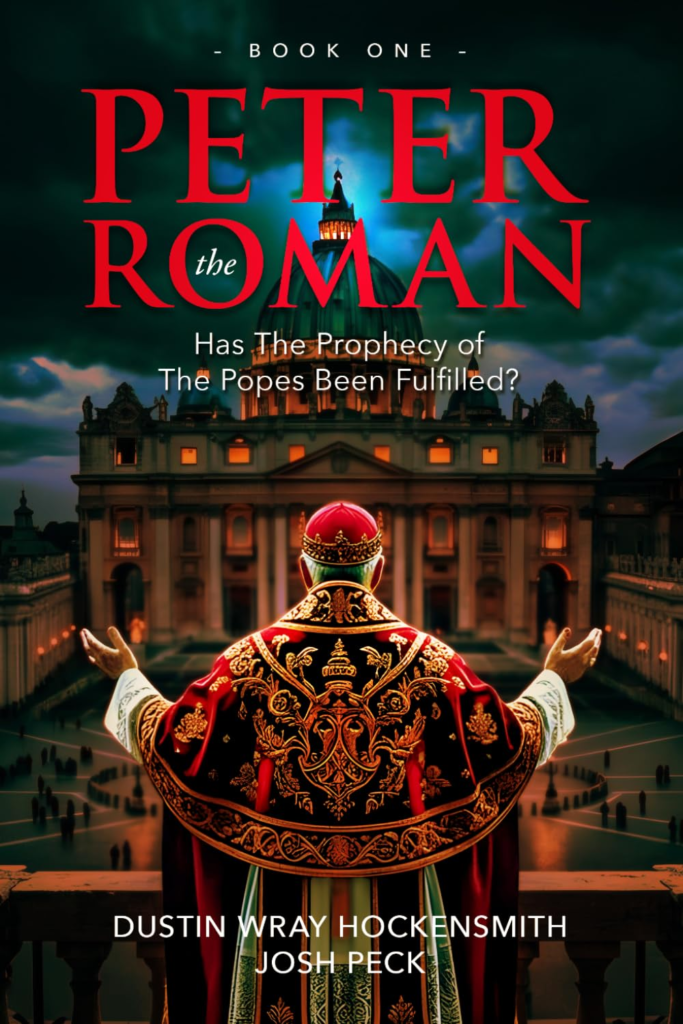
The Prophecy of the Popes extends beyond its 1595 publication in Lignum Vitæ. It contains mottos for popes from the seventeenth century onward, often cited for their striking alignment with papal characteristics, heraldry, or events. While the prophecy’s pre-1595 mottos are tied to historical popes, its post-1595 predictions have drawn attention for their apparent accuracy in describing later pontiffs.
A significant post-1595 example is Paul VI (1963–1978), whose motto, Flos florum (“Flower of flowers”), corresponds to his coat of arms, which featured three fleurs-de-lis. Born Giovanni Battista Montini, Paul VI guided the Church through the Second Vatican Council (1962–1965), implementing reforms to modernize Catholic liturgy and ecumenism. The fleur-de-lis, a symbol of purity in Catholic tradition, aligns with his efforts to renew the Church’s spiritual mission.
Pius XII (1939–1958), assigned the motto Pastor angelicus (“Angelic shepherd”), is another striking match. Born Eugenio Pacelli, he led the Church during World War II, earning recognition for aiding war victims and protecting Jews from Nazi persecution, though his public silence on the Holocaust sparked debate, though remains contested. His ascetic lifestyle and deep piety led contemporaries to view him as a saintly figure, embodying the “angelic” quality of his motto. His role as a shepherd guiding the Church through global conflict aligns with the prophecy’s description, reinforcing its perceived accuracy.
John XXIII (1958–1963), with the motto Fides intrepida (“Intrepid faith”), exemplifies bold leadership. Born Angelo Giuseppe Roncalli, he convened the Second Vatican Council, a step to reform the Church and engage the modern world. The council’s outcomes, including changes to liturgy and ecumenical outreach, transformed Catholicism, and the motto captures his commitment to this mission. His prior role as Patriarch of Venice, a maritime city, also ties to his pastoral identity, though the prophecy emphasizes his faith.
John Paul II (1978–2005), under the motto De labore solis (“From the labor of the sun”), offers a multifaceted connection. Born Karol Wojtyła in Poland, he traveled to over 120 countries, earning the title “pilgrim pope” for his global evangelization. The motto is linked to solar eclipses on his birth (May 18, 1920) and funeral (April 8, 2005). Proponents point to the coincidence that eclipses occurred on both dates. His Polish heritage connects to Nicolaus Copernicus, who advanced solar astronomy, and had a role in opposing communism. His devotion to the Virgin Mary, tied to the Fatima apparitions involving a solar miracle, further supports the motto’s fit.
Other post-1595 mottos also align closely. Pius X (1903–1914), assigned Ignis ardens (“Burning fire”), was known for his zealous reforms against modernism and promotion of Eucharistic devotion, matching the motto’s fervor. Benedict XV (1914–1922), with Religio depopulata (“Religion destroyed”), faced World War I and the Russian Revolution, events that disrupted Christianity greatly, aligning with the motto’s theme. These examples show the prophecy’s ability to capture defining traits or events, even centuries after 1595.
The post-1595 mottos demonstrate remarkable accuracy through heraldic symbols, as with Paul VI and Leo XIII, or pivotal roles, as with Pius XII and John XXIII. John Paul II’s motto, tied to celestial events and global mission, demonstrates the prophecy’s accuracy that should be impossible for someone to invent. It is through these predictions, and more, that I have found myself at least open to the possibility of the prophecy’s legitimacy.
As said before though, we must hold it to biblical standards. If it’s not 100 percent accurate (not just though vague criticisms, but through objective, hard-proof fact), then the prophecy can be safely thrown out. In fact, according to some, it might be the final three predictions that completely debunk the prophecy in full. However, there is a possibility that these have been misunderstood and, with the correct interpretations, the Prophecy of the Popes may be proven true after all.
Notes
Malachy. Prophecy of the Popes. (S.l.: Eisenbrauns 2015), 108; Catholic Faith Store, “Why Do Popes Have a Coat of Arms?” 2023.
Catholic News Agency. “CNA Explains: What Is the St. Malachy Prophecy and Why Are People Talking About It?” 2024. https://www.catholicnewsagency.com/news/263657/cna-explains-what-is-the-st-malachy-prophecy-and-why-are-people-talking-about-it.
Malachy. Prophecy of the Popes, 107; Irish Central, “St. Malachy’s Prophecy – Is Pope Francis the Last Pope?” 2024. https://www.irishcentral.com/roots/history/st-malachy-prophecy-pope-francis.
Malachy. Prophecy of the Popes, 110; Irish Examiner, “The Prophecy of St Malachy: Is Pope Francis Our Last Pope?” 2024. https://www.irishexaminer.com/news/arid-41618344.html.
Catholic Tradition. “Papal Prophecies of St. Malachy.” http://www.catholictradition.org/Papacy/prophecies.htm; Bible Hub. “What Does St. Malachy Predict?” https://biblehub.com/q/what_does_st._malachy_predict.htm.
Get the Daily Renegade Newsletter
New articles, research, releases, videos, and major updates from Renegade Publishers.
Excerpted from Peter the Roman: Has the Prophecy of the Popes Been Fulfilled? Book 1 by Dustin Wray Hockensmith & Josh Peck.