René Thibaut and the Strange 2012 Calculation in the Prophecy of the Popes
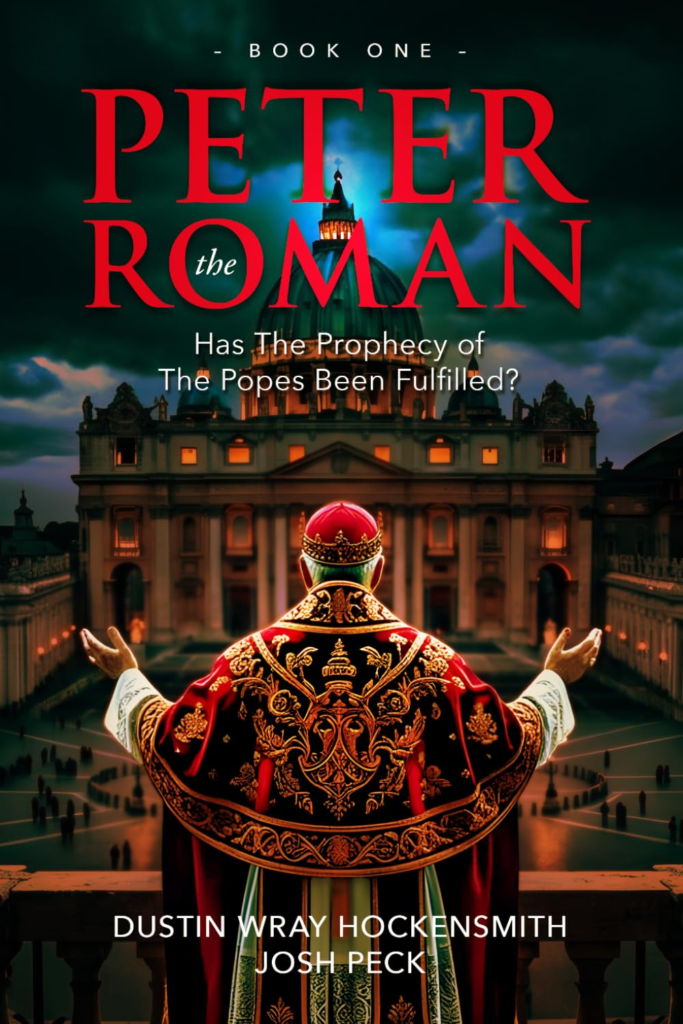
The following is an excerpt from Peter the Roman: Has the Prophecy of the Popes Been Fulfilled? Book 2 by Dustin Wray Hockensmith and Josh Peck.
René Thibaut and the Year 2012
When will the papal system end? [It] will be destroyed in the year 2012.
— Reverend William J. Reid, writing in his “Lectures on the Revelation,” 1878
Who Was René Thibaut?
As I (Hockensmith) was researching this book, I became even more impressed with the incredible work that Tom Horn and Cris Putnam did in writing Petrus Romanus. In regard to the author of The Mysterious Prophecy of the Popes (1951), Jesuit priest René Thibaut, Horn and Putnam made a statement that “his background has been particularly difficult to track down.” I can attest that this was quite an understatement. Fortunately, I do have the amazing work that they did in Petrus Romanus to fall back on, which even included translating some of his writing from French to English.
René Thibaut was a Catholic Jesuit priest who was Belgian-born in the tiny municipality of Cincy on December 13, 1883. He entered the Jesuit order in September 1901. He served on the faculty of University De Namur, which was founded by the Jesuit order in Namur, Belgium, in 1831. He wrote books on theology and Bible study with titles such as The Meaning of Christ’s Words (1940), The Meaning of the God Man (1946), and the book of his that we will be discussing, The Mysterious Prophecy of the Popes (1951). He died in Egenhoven, Belgium, on November 23, 1952, only four months after his book on The Prophecy of the Popes was published.
This chapter is entitled René Thibaut and the Year 2012. As we originally outlined this book, I only planned to write this chapter about this man’s extremely complex work and how he explained in his book exactly how he arrived at the year he believed the last pope on the list of The Prophecy of the Popes would arrive on the scene. I still plan to do so.
However, there is so much more synergy involving the year 2012 that I could not simply write about this one man’s work. I had to write so much more in this chapter regarding this particular year that has been anticipated in so many different ancient prophecies to be the dawning of a new age. Tom Horn wrote extensively about it in Zenith 2016 (the revised and expanded version of his book Apollyon Rising 2012), and also in Petrus Romanus. We will explore the same themes and also the reasons why Mr. Horn thought it was so important to look into such things. Even with expanding the scope of this chapter, it works out that its title still fits rather well.
René Thibaut: A Beautiful Mind?
There is no denying that René Thibaut’s mind was nothing short of amazing. His final book, The Mysterious Prophecy of the Popes, was described by Horn and Putnam as “deeply mystical and prohibitively complex to explain exhaustively.”
In this book, Thibaut examined the prophecy and made his own arguments for its validity. Thibaut then also went about trying to determine mathematically, in different ways, exactly when he believed that the final pope (number 112 on the list), would appear on the scene. He kept coming up with same answer — the year 2012.
Now before moving on, I want to remind you that Thibaut was a Jesuit priest, and that Tom Horn is quoted as saying that some of the reasoning Thibaut used to arrive at 2012 was based on mystical things such as astronomical alignments, etc. We also learned that some in the Jesuit order are likely inclined to using mysticism and witchcraft. So, it is no surprise when Mr. Horn also reveals that much of Thibaut’s reasoning was based on gematria, a numbering system used in many forms of witchcraft, ceremonial magic, and occult traditions. It is also used in the Jewish mystical practice of Kabbala.
The gematrial, mathematical equations Thibaut devised that appear in his book are full pages in length. I have no shame in revealing to you that they are far beyond my mathematical skills to understand or explain. My math skills may be somewhat limited, but I think it would be safe to say that they are also likely beyond the mathematical abilities of most people.
To be honest, what he was doing was truly beyond math itself, for if you are familiar with gematria, he was assigning mathematical values to letters, based on the Roman numeric system. A whole system needs to be implemented to begin to do something like this. I would have to agree with the authors of Petrus Romanus when they remarked that the whole thing seemed somewhat ad hoc, and that they felt as if he was trying to go to great lengths when using this system to somehow arrive at the year 2012.
However, one mathematical method he used to get to 2012 can be explained very easily and should also be very easily understood. This method he devised was simply using eleven years as the average span of a pope in office. It may sound a bit risky, as the lengths of papal reigns are highly subject to a vast number of variables. But surprisingly, it seemed to work.
Thibaut applied this method to the popes on the list starting with the year 1572 and landed in the year 2012. Horn and Putnam tried the method out on just the popes who reigned from the time since Thibaut’s book was published until the papacy of John Paul II and the pattern of an eleven-year average amazingly still held true. When doing this, they also noted that if the current Pope at the time (Pope Benedict XVI) were to step down in April 2012, it would yield a near-perfect eleven-year pattern.
Despite all of Thibaut’s intricate math, he did not use any decimals in this particular theory, just eleven years. The idea of the perfection of the eleven year theory (i.e., getting it down to the exact month) rested with the authors of Petrus Romanus. Then, they saw a news story from the Vatican Insider that truly alarmed them. The September 25, 2011 issue included a story with the headline: “Media Say Pope May Resign in April.”
Peter the Roman Collections
Explore Peter the Roman: Has the Prophecy of the Popes Been Fulfilled? in paperback, digital, or the Collector’s Box Set.
Paperback Collection • Digital Research Collection • Collector’s Box Set
Get the Daily Renegade Newsletter
Get new Renegade News reports, videos, book releases, and special updates by email. Free to join. Unsubscribe anytime.
Excerpted from Peter the Roman: Has the Prophecy of the Popes Been Fulfilled? Book 2.